|
Newsletter 2026 May & June
2026年5&6月简报
|
|
About Us 国际微无创医学会简介
|
The International Society of Minimally Invasive and Virtual Surgery (ISMIVS, previously known as International Society of Minimally Invasive and Noninvasive Medicine) was founded in July 2013 at the gala of the 1st Yangtze International Summit of Minimally Invasive and Noninvasive Medicine in Chongqing, China. ISMIVS envisions to accelerating the progress in minimally invasive and noninvasive medicine by promoting research, education, communication, and international collaboration.
国际微无创医学会(ISMIVS)是在 2013 年 7 月在中国重庆召开的第一届国际微无创医学长江高峰论坛上宣布成立的,旨在通过学术研究、教育、交流以及国际合作加快微无创医学的发展。
|
|
Become a member 注册成为会员 >
|
|
Ideas about Young ISMIVS 医路青春专访栏目
|
Ideas about Young ISMIVS
医路青春专访栏目
|
|
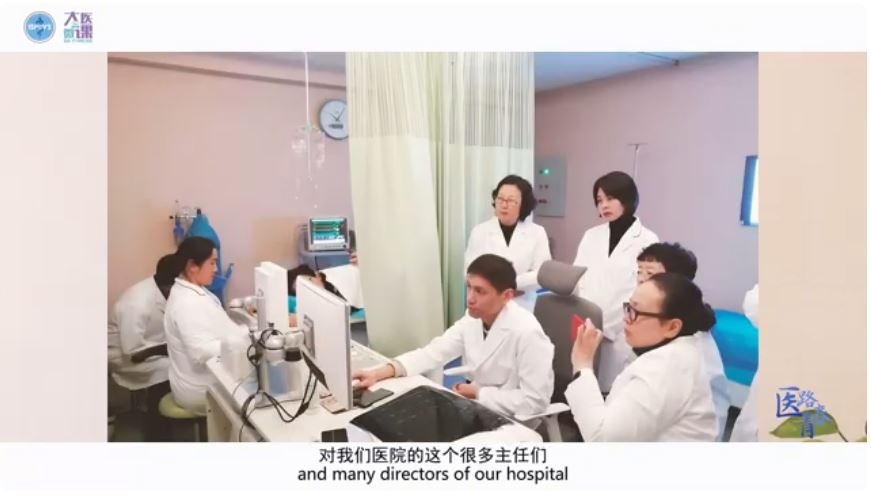
In July 2023, the Young ISMIVS Committee was formally established in order to respond to the development trend of minimally invasive and noninvasive medicine, and further consolidate the core group of young physicians.
为顺应微无创医学发展的趋势,进一步凝聚中青年微无创医学骨干的力量,推动微无创医学的发展。2023年7月,国际微无创医学会“青年委员会”(以下简称“青委会”)正式成立。
As the youth force of the new era in the field of minimally invasive and noninvasive medicine, the Young ISMIVS Committee carries the important mission of enlightening medical innovation and leading the development of this field. It will become a solid pillar to promote the breakthroughs in minimally invasive and noninvasive medicine to new heights through its unique vitality and profound deposits.
青委会作为微无创领域新时代的青春力量,承载着启迪医学创新、引领微无创技术发展的重要使命,将凭借其独特的创新活力和深厚的专业积淀,成为推动微无创领域不断突破、迈向新高峰的坚实砥柱。
In medicine, a group of passionate young physicians, who harbor the love and persistence for minimal invasiveness and non-invasiveness, keep exploring and moving forward. They are the members of the Young ISMIVS Committee, who contribute to the development of this field with their enthusiasm and wisdom.
在医学的广阔天地里,这样一群热血的青年医者,他们怀揣着对微无创医学的热爱与执着,不断探索、不断前行。他们,正是青委会的成员,他们以青春的热情与智慧,为微无创医学的发展贡献着自己的力量。
In conjunction with Da Yi Wei Ke, we are now introducing the first interview show – Ideas about Young ISMIVS. Let's get closer to this group of young doctors, listen to their stories on the path of minimally invasive and non-invasive medicine, feel their passion and persistence, and witness the bright future together.
国际微无创医学会青年委员会联合大医微课策划出品,首档人物专访节目《医路青春》正在播出。让我们走近这群青年医者,聆听他们在微无创路上的成长故事,感受他们的热情与执着,共同见证微无创医学的辉煌未来。
Ideas about Young ISMIVS with:
本期嘉宾:
|
|
|
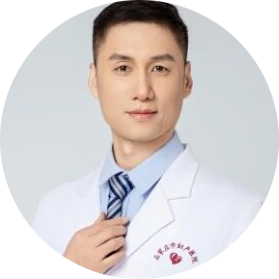
Wang Haixing
Director of the HIFU Center
Shijiazhuang Maternal and Child Health Hospital
王海兴
HIFU中心主任
石家庄市妇产医院
-Standing Committee Member of the Young ISMIVS Committee
-Standing Committee Member of the Non-invasive Focused Ultrasound Technology Promotion Committee of the China Maternal and Child Health Association
-Member of the Focused Ultrasound Ablation Therapy Working Group of the Ultrasound Therapy and Bioeffects Specialized Committee of the Chinese Society of Ultrasound in Medicine and Biology
-国际微无创医学会青年委员会常务委员
-中国妇幼保健协会无创聚焦超声技术项目推广委员会常务委员
-中国超声医学工程学会超声治疗及生物效应专委会聚焦超声消融治疗学组委员
|
|
Watch the interview:
|
|
https://youtu.be/iqnzK2Jq_I8?si=1osPpU4LNFthmuvW
|
|
观看本期采访:
|
|
https://mp.weixin.qq.com/s/0DVb_1hYxVGs3ohBLLm8jA
|
|
News 新闻
|
Parallel Session of ISMINIM 2025: Integrated Treatment Strategies for Malignancies
2025微无创医学长江论坛分会场精彩速递:恶性肿瘤的联合疗法
|
|
|
|
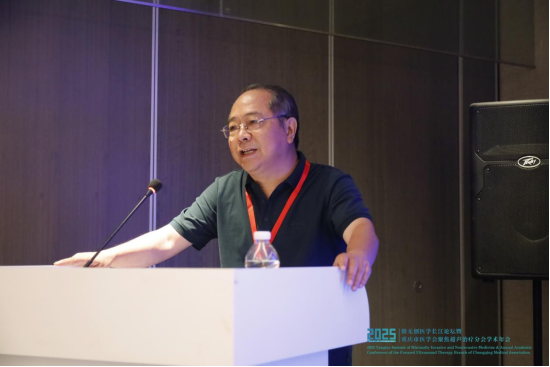
The session was chaired by Fang Jianming, Vice President of Lanxi Traditional Chinese Medicine Hospital, Wang Binbin, Director of the Oncology Department at the First Affiliated Hospital of Zhejiang University of Traditional Chinese Medicine, and others..
兰溪市中医院副院长方建明、浙江中医药大学附属第一医院肿瘤科主任王彬彬等人担任主持。
|
|
|
Professor Chen Wenzhi, Chief Medical Expert at the National Engineering Research Center for Ultrasound Medicine, presented the latest clinical advancements in the use of FUS (Focused Ultrasound) combined with RT (Radiotherapy) for the treatment of malignant tumors. He highlighted the technology’s advantages in precisely ablating tumor tissue while reducing the side effects of radiotherapy, and outlined future research directions for optimizing combined treatment regimens and expanding indications.
超声医疗国家工程研究中心首席医学专家陈文直教授介绍了FUS(聚焦超声)联合放疗(RT)在恶性肿瘤治疗中的最新临床应用进展,强调了该技术在精准消融肿瘤组织的同时降低放疗副作用的优势,并展望了未来在联合治疗方案优化和适应症拓展方面的研究方向。
Professor Gao Yusi, Director of the Department of Mongolian Oncology at the Inner Mongolia Autonomous Region International Mongolian Medicine Hospital, analyzed the mechanisms of action for FUS-assisted treatment of malignant tumors from the perspective of the holistic view of Mongolian medicine. He proposed an innovative approach that combines traditional medical concepts with modern ultrasound technology to enhance antitumor effects by regulating the body’s overall condition.
内蒙古自治区国际蒙医医院蒙医肿瘤科主任高钰思教授从蒙医整体观的角度分析了聚焦超声协同治疗恶性肿瘤的疗效机制,提出将传统医学理念与现代超声技术结合,通过调节机体整体状态来增强抗肿瘤效应的创新思路。
Professor Guo Xiaodong, Director of the Second Oncology Department at Yueyang Hospital of Integrated Traditional Chinese and Western Medicine (affiliated with Shanghai University of Traditional Chinese Medicine), shared typical case studies and clinical data on the combined use of Traditional Chinese Medicine (TCM) and high-intensity focused ultrasound (HIFU) for treating malignant tumors. He highlighted the synergistic value of TCM in alleviating postoperative inflammatory responses following HIFU treatment and promoting the body’s recovery.
上海中医药大学附属岳阳中西医结合医院肿瘤二科主任郭晓冬教授分享了中医联合高强度聚焦超声治疗恶性肿瘤的典型案例和临床数据,指出中医药在减轻高强度聚焦超声术后炎症反应、促进机体恢复方面的协同价值。
Professor Liao Xiuyong, Director of the Department of Oncology at the Qianjiang Hospital Affiliated to Chongqing University, provided an in-depth discussion of the key technical challenges facing the use of high-intensity focused ultrasound (HIFU) in combination with radiotherapy for the treatment of malignant tumors. These challenges include precise targeting of the treatment area, dose control, and the clinical translation of radiosensitization effects. He called for the establishment of multidisciplinary collaboration to address treatment bottlenecks in complex cases.
重庆大学附属黔江医院肿瘤科主任廖修用教授深入探讨了高强度聚焦超声联合放疗治疗恶性肿瘤面临的关键技术难题,包括靶区精准定位、剂量控制以及放射增敏效应的临床转化挑战,呼吁建立多学科协作解决复杂病例的治疗瓶颈。
During the discussion session, experts such as Xu Yonghua from the Xuhui Hospital of Zhongshan Hospital, Fudan University, and Yu Ning from Qingdao University Affiliated Hospital shared their experiences with personalized applications of HIFU combination therapy across various cancer types (such as pancreatic cancer and bone tumors). They also offered practical recommendations regarding the standardization of treatment parameters and the refinement of efficacy evaluation systems.
复旦大学附属中山医院徐汇医院许永华、青岛大学附属医院于宁等专家在讨论环节补充了高强度聚焦超声联合治疗在不同癌种(如胰腺癌、骨肿瘤)中的个性化应用经验,并就治疗参数标准化、疗效评估体系完善提出了实践建议。
|
|
Watch the playback of the Summit:
|
|
https://www.youtube.com/playlist?list=PLWbjlVbxcLm3p9sE4xg3Z8YdcvZ4xOuYj
|
|
观看会议回放:
|
|
https://live.dayiweike.com/video/huikan/1980?m=jin
|
|
New Perspective in Focused Ultrasound 聚焦超声新视角
|
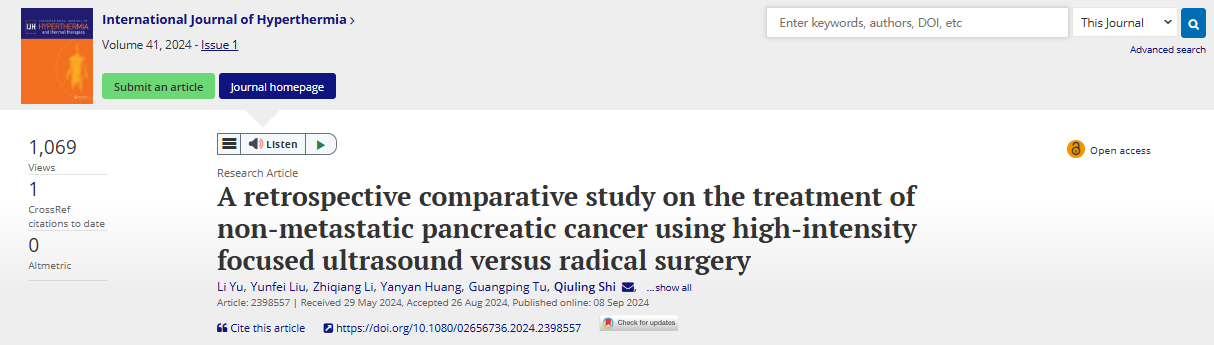
A retrospective comparative study on the treatment of non-metastatic pancreatic cancer using high-intensity focused ultrasound versus radical surgery
高强度聚焦超声消融术后子宫肌瘤患者妊娠结局及其影响因素分析
|
|
To compare the efficacy and safety of high-intensity focused ultrasound (HIFU) and radical surgery for non-metastatic pancreatic cancer (PC). This study retrospectively analyzed 89 stage I/II/III PC patients who underwent HIFU (n = 43) or surgery (n = 46) at the Third Xiangya Hospital from January 2020 to December 2021. Pain relief, Karnofsky Performance Scale (KPS), overall survival (OS), treatment-related complications and risk factors for OS were assessed.
|
为比较高强度聚焦超声(HIFU)与根治性手术治疗非转移性胰腺癌(PC)的疗效和安全性,该研究对2020年1月至2021年12月期间在湘雅三院接受HIFU治疗(n=43)或手术治疗(n=46)的89例I/II/III期胰腺癌患者进行了回顾性分析。评估指标包括镇痛效果、卡氏功能状态评分(KPS)、总生存期(OS)、治疗相关并发症以及影响总生存期的风险因素。
|
There was no significant difference in the pain relief rate at 30 days post-treatment between the two groups. However, compared with the surgery group, the HIFU group showed significantly lower post-treatment VAS scores (p = 0.019). In the surgery group, the KPS at 30 days post-treatment was lower than pretreatment KPS (70 vs 80; p = 0.015). This relationship was reversed in the HIFU group (80 vs 70; p = 0.024). Median OS favored surgery over HIFU (23 vs 10 months; p < 0.001), with a higher 1-year OS rate (69.57% vs 32.6%; p < 0.001). However, there was no significant difference in OS between the two groups for stage III patients (p = 0.177). Complications rated ≥ grade III were 2.33% in the HIFU group and 32.6% in the surgery group. Multivariate analyses showed that age, KPS, and treatment methods were independent prognostic factors for OS.
|
两组在治疗后 30 天的镇痛率方面无显著差异。然而,与手术组相比,HIFU 组的治疗后 VAS 评分显著较低(p = 0.019)。在手术组中,治疗后 30 天的 KPS 评分低于治疗前 KPS 评分(70 vs 80;p = 0.015)。而在 HIFU 组中,这一关系发生了逆转(80 vs 70;p = 0.024)。手术组的中位总生存期优于 HIFU 组(23个月 vs 10个月;p < 0.001),且1年总生存率更高(69.57% vs 32.6%;p < 0.001)。然而,对于III期患者,两组之间的OS无显著差异(p = 0.177)。HIFU 组中≥III 级的并发症发生率为 2.33%,手术组为 32.6%。多变量分析显示,年龄、KPS 和治疗方法是 OS 的独立预后因素。
|
HIFU demonstrates advantages over surgery in terms of early KPS, VAS improvements, and safety for pancreatic cancer; however, long-term outcomes favor surgery. For III-stage disease, HIFU was noninferior to surgery in overall survival.
|
在早期 KPS 评分、VAS 评分改善以及安全性方面,HIFU 在胰腺癌治疗中显示出优于手术的优势;然而,从长期疗效来看,手术更具优势。对于 III 期疾病,HIFU 在总生存期方面不逊于手术。
|
|
Read More >
|
Tech Update in Gynaecological Endoscopy 妇科腔镜技术最新进展
|
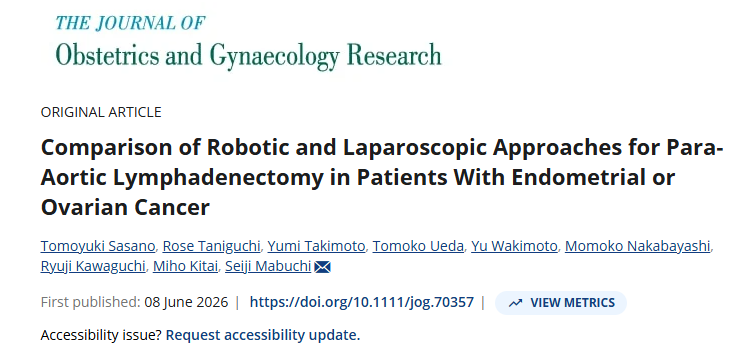
Comparison of Robotic and Laparoscopic Approaches for Para-Aortic Lymphadenectomy in Patients With Endometrial or Ovarian Cancer
子宫内膜癌或卵巢癌患者行腹主动脉旁淋巴结清扫术中机器人手术与腹腔镜手术方法的比较
|
|
To compare the surgical and oncological outcomes between robotic and laparoscopic para-aortic lymphadenectomy (PALND) in Japanese women with endometrial cancer or ovarian cancer,this retrospective study included patients who underwent minimally invasive surgery, including PALND, between March 2018 and January 2025 at three Japanese institutions. Patients with endometrial cancer or ovarian cancer were divided into robotic and laparoscopic surgery groups. Surgical outcomes and oncological outcomes were compared between the two groups.
为了比较日本子宫内膜癌或卵巢癌女性患者接受机器人辅助和腹腔镜腹主动脉旁淋巴结清扫术(PALND)的手术及肿瘤学疗效,本项回顾性研究纳入了 2018 年 3 月至 2025 年 1 月期间在日本三家医疗机构接受微创手术(包括PALND)的患者。研究将子宫内膜癌或卵巢癌患者分为机器人手术组和腹腔镜手术组,并对两组的手术结果及肿瘤学结果进行了比较。
A total of 60 patients were analyzed (robotic group: n = 33; laparoscopic group: n = 27). The operative time was significantly longer in the robotic group, whereas intraoperative blood loss did not differ significantly between the groups. No significant differences were observed in intraoperative or postoperative complication rates, nor in the length of hospital stay. The total number of retrieved pelvic and para-aortic lymph nodes was comparable between the two groups [70.0 (robotic group) vs. 72.5 (laparoscopic group), p = 0.480]. Furthermore, there were no significant differences in overall survival (p = 0.483) or progression-free survival (p = 0.837) between the groups.
共分析了 60 名患者(机器人组:n=33;腹腔镜组:n=27)。机器人组的手术时间显著更长,而两组间的术中出血量无显著差异。术中及术后并发症发生率以及住院时间在两组间均无显著差异。两组切除的盆腔及腹主动脉旁淋巴结总数相当[机器人组 70.0 个 vs. 腹腔镜组 72.5 个,p = 0.480]。此外,两组在总生存期(p = 0.483)或无进展生存期(p = 0.837)方面均无显著差异。
Robotic PALND demonstrated perioperative safety, surgical quality, and oncological outcomes comparable to those of laparoscopic PALND. These findings suggest that robotic-assisted PALND can be performed safely and effectively, with outcomes comparable to those achieved with conventional laparoscopic approaches in Japanese patients with gynecological cancers.
机器人辅助 PALND 在围手术期安全性、手术质量及肿瘤学疗效方面均与腹腔镜 PALND 相当。这些研究结果表明,对于日本妇科癌症患者而言,机器人辅助 PALND 既安全又有效,其疗效与传统腹腔镜手术相当。
|
|
Read More >
|

|
|
|
|
|




 +86 23 67886199